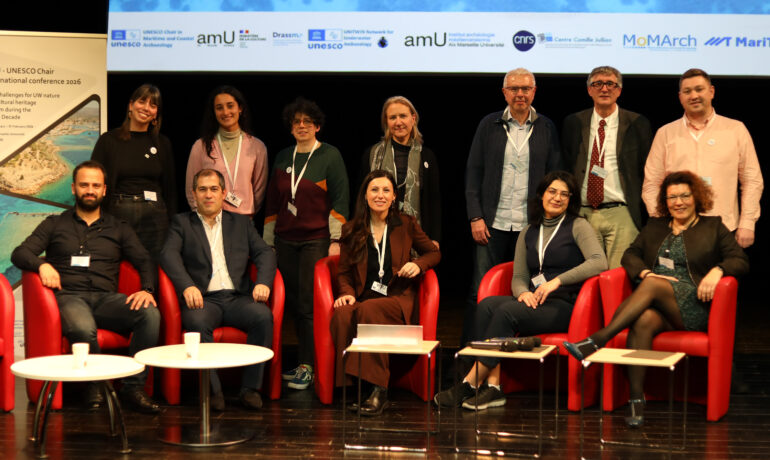
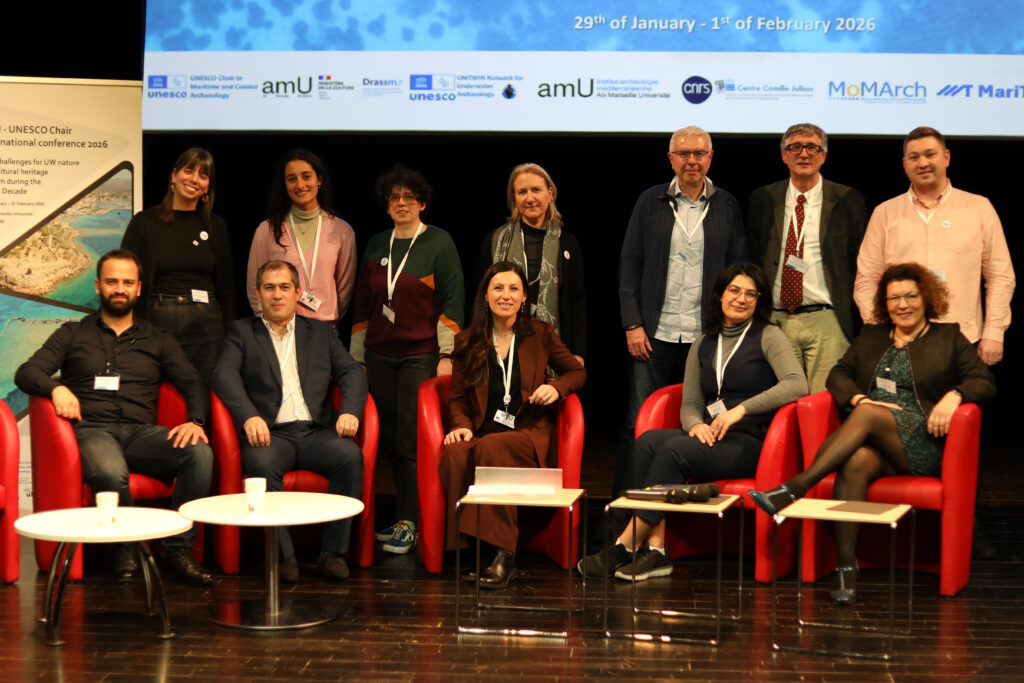
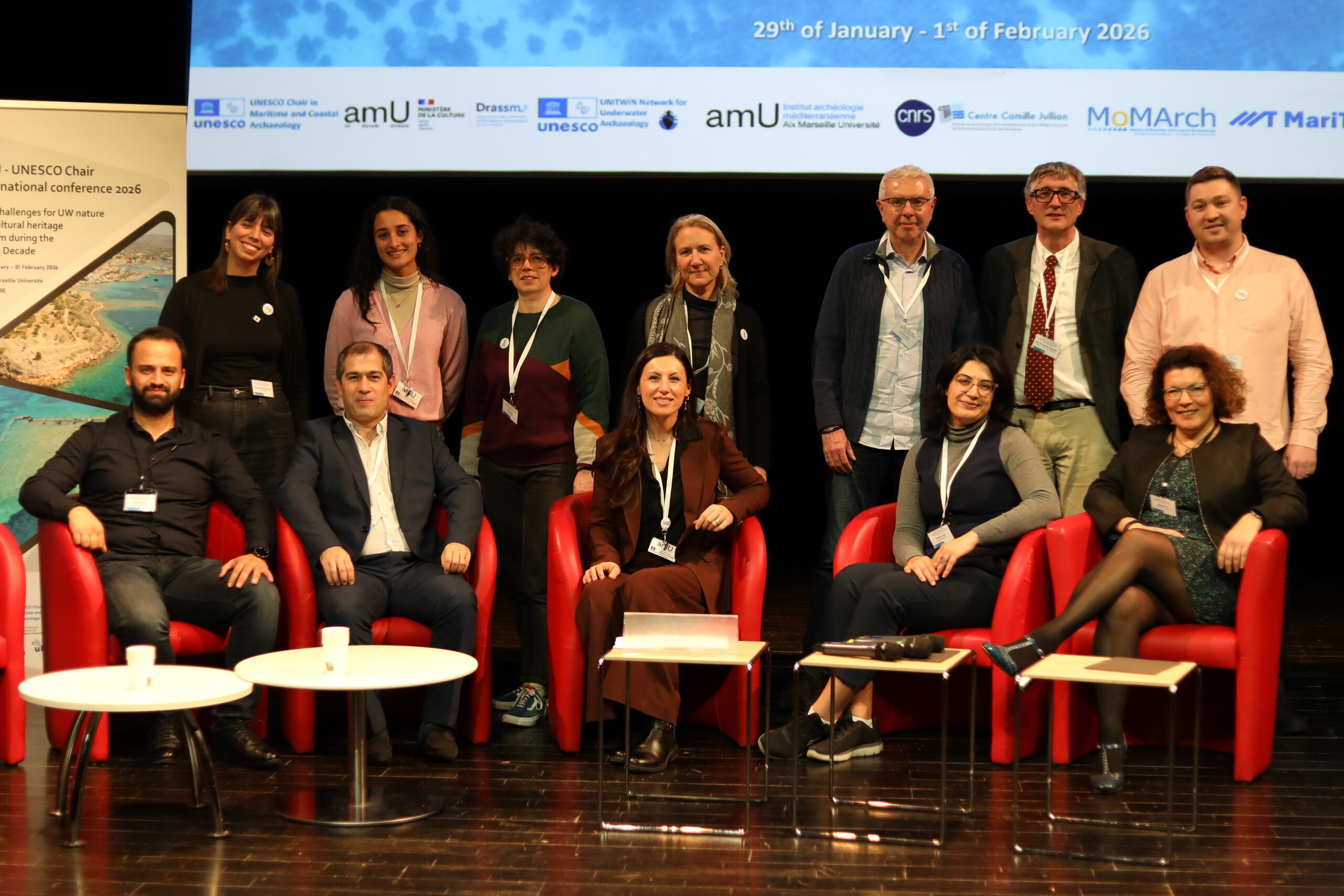
The International Conference “New Challenges for Underwater Nature and Cultural Heritage Tourism during the Ocean Decade” was successfully completed. The conference was organised by the UNESCO Chair in Maritime and Coastal Archaeology at Aix-Marseille University (AMU), in collaboration with the UNESCO 2001 Convention Secretariat, the UNESCO UNITWIN Network for Underwater Archaeology, and the European projects uBlueTec (EMFAF), ecoRoute (EMFAF), and TOURAL (Horizon Europe). The conference took place at Le Cube (THE CUBE) of Aix-Marseille University, from 29 January to 1 February 2026.
Atlantis Consulting, partner in all three projects — and coordinator of ecoRoute — actively contributed to the organisation of the conference, which gathered more than 250 participants, including academics, researchers, policy makers, and professionals from across Europe and internationally. The central objective of the conference was the exchange of knowledge and best practices for the sustainable management, protection, and promotion of Underwater Natural and Cultural Heritage (UNCH), within the framework of the UN Ocean Decade.
The multi-thematic programme included the sessions:
- UNESCO priorities & EU policies during the Ocean Decade, with emphasis on strategic direction, European policies, and future funding opportunities.
- Capacity building in underwater technologies and contributions to the Blue Economy, highlighting the role of skills, education, and technological innovation.
- Ocean Decade legal frameworks, with discussions on institutional and legal frameworks for the protection of UNCH.
- Sustainable underwater cultural tourism & open accessibility, focusing on the balance between protection and accessibility.
- Impacts of climate change on underwater and coastal cultural heritage, highlighting contemporary threats and the need for monitoring and adaptation.
- Acknowledgement and Interpretation Centres – The Cave Cosquer full-scale reconstruction.
- Underwater parks, Marine Protected Areas & lessons learnt, with examples from Mediterranean countries, including Greece.
- Social engagement, public accessibility & dissemination strategies, presenting best practices in public participation and communication of underwater heritage.
- Extensive poster sessions, showcasing research and innovative initiatives.
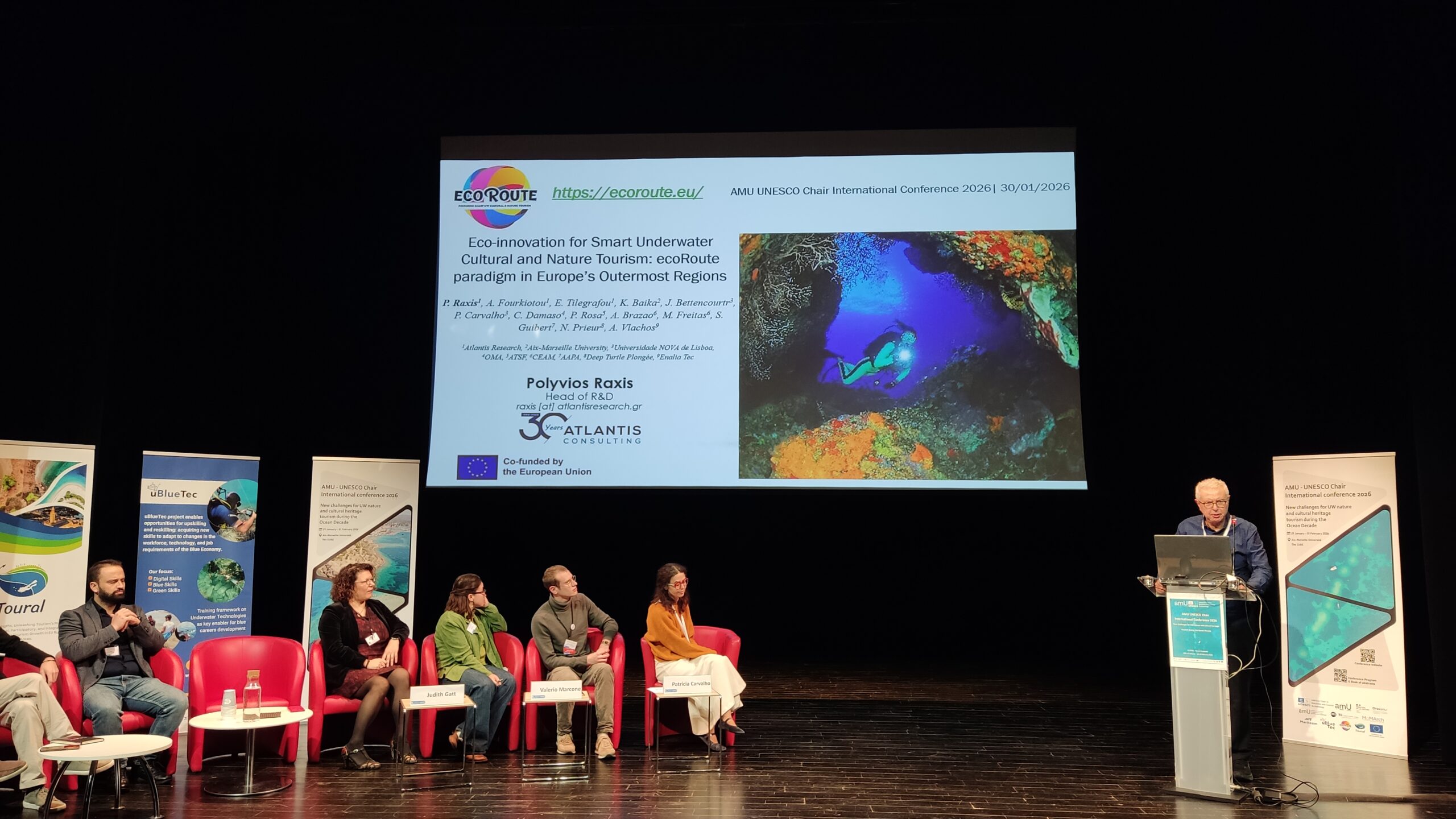
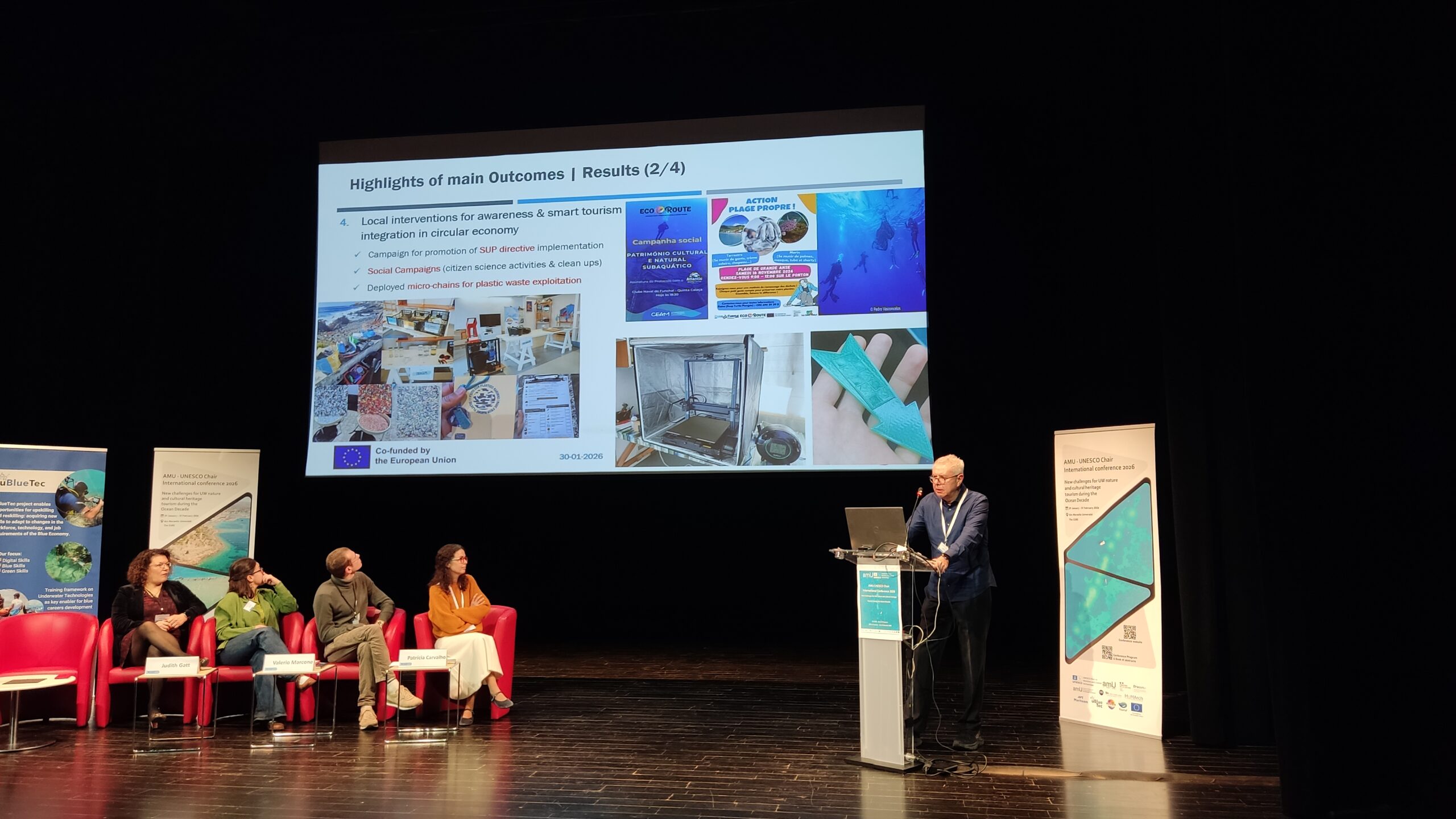
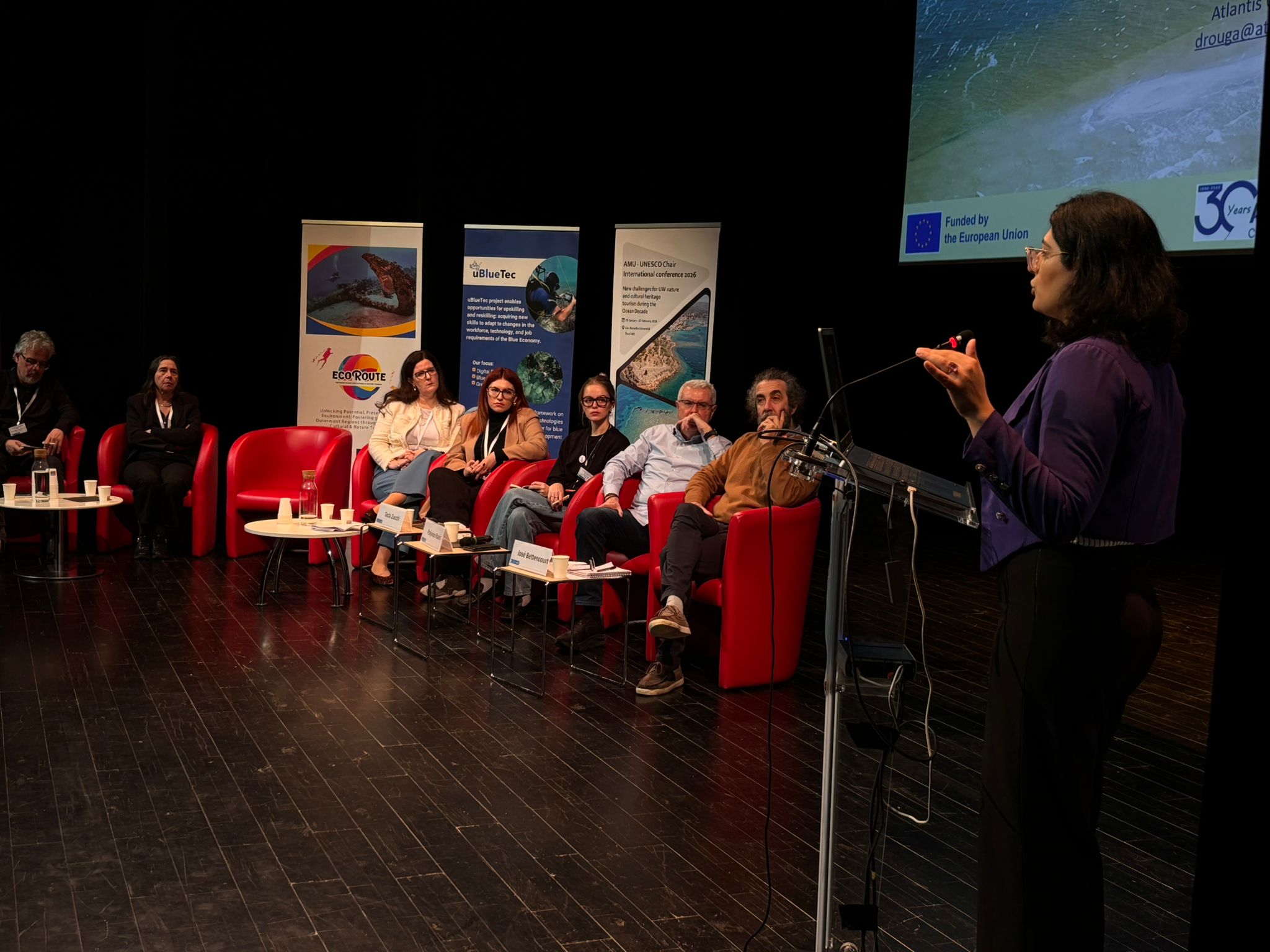
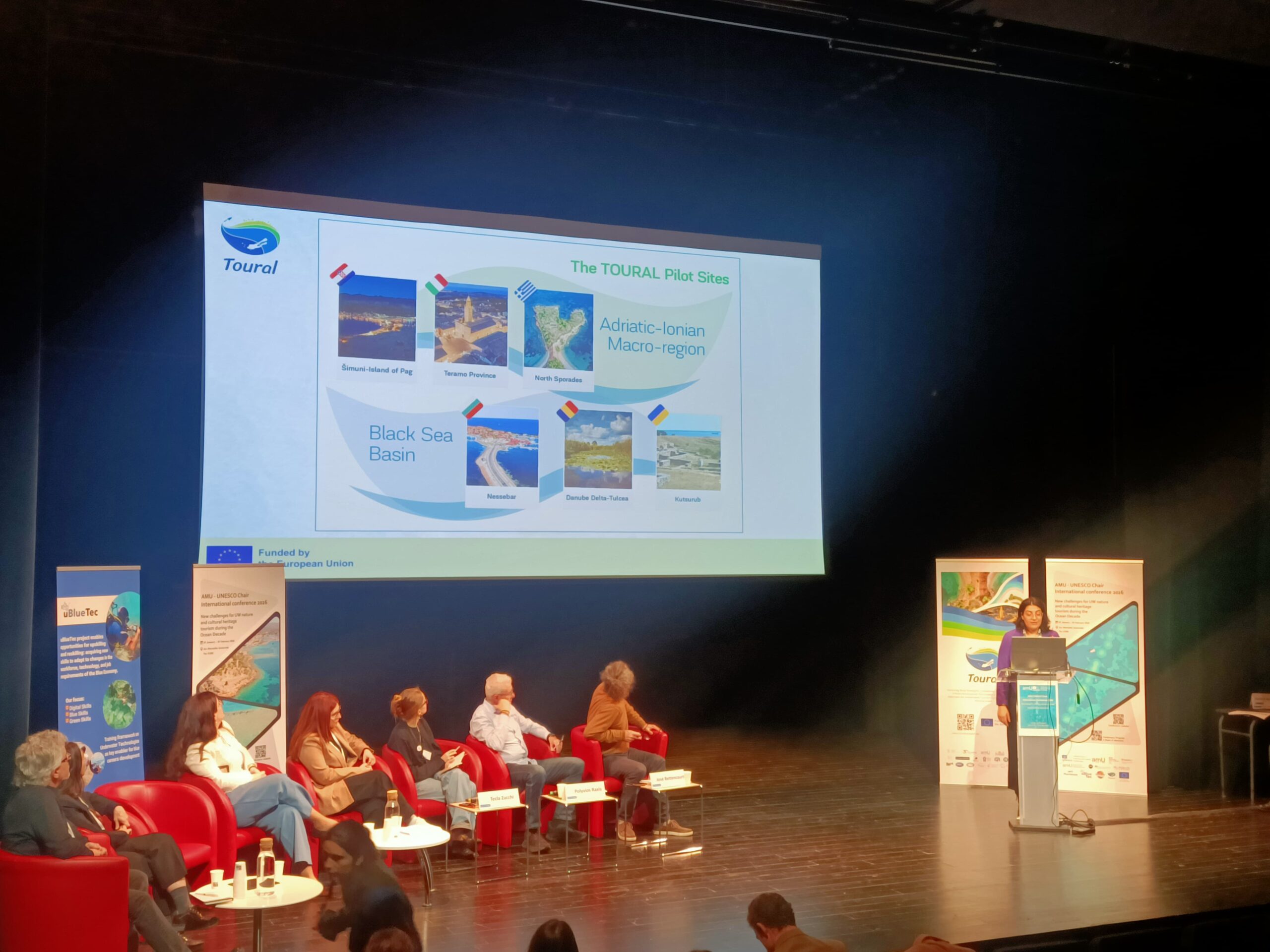
Particular emphasis was placed on the three special sessions dedicated to the European projects ecoRoute, TOURAL, and uBlueTec. The ecoRoute project was presented by Polyvios Raxis, R&D Director of Atlantis Consulting, highlighting innovative eco-innovation approaches for smart Underwater Cultural and Natural Tourism and the importance of heritage for local tourism development. The TOURAL project was presented by Vicky Drouga, Project Manager at Atlantis Consulting, focusing on the development of complementary tourism sectors — Underwater Natural and Cultural Heritage, Cultural & Creative Tourism, and cultural-scientific tourism — in rural and remote areas through a multidimensional Tourism Development Model. The uBlueTec project, which focuses on the development of innovative technologies and skills with a view toward a future sustainable “Blue Economy” through the development of the specialised platform BlueTec.jobs, was presented by the project coordinator Dr. Kalliopi Baika, Associate Professor at Aix-Marseille University, who significantly contributed to the organisation of the conference.
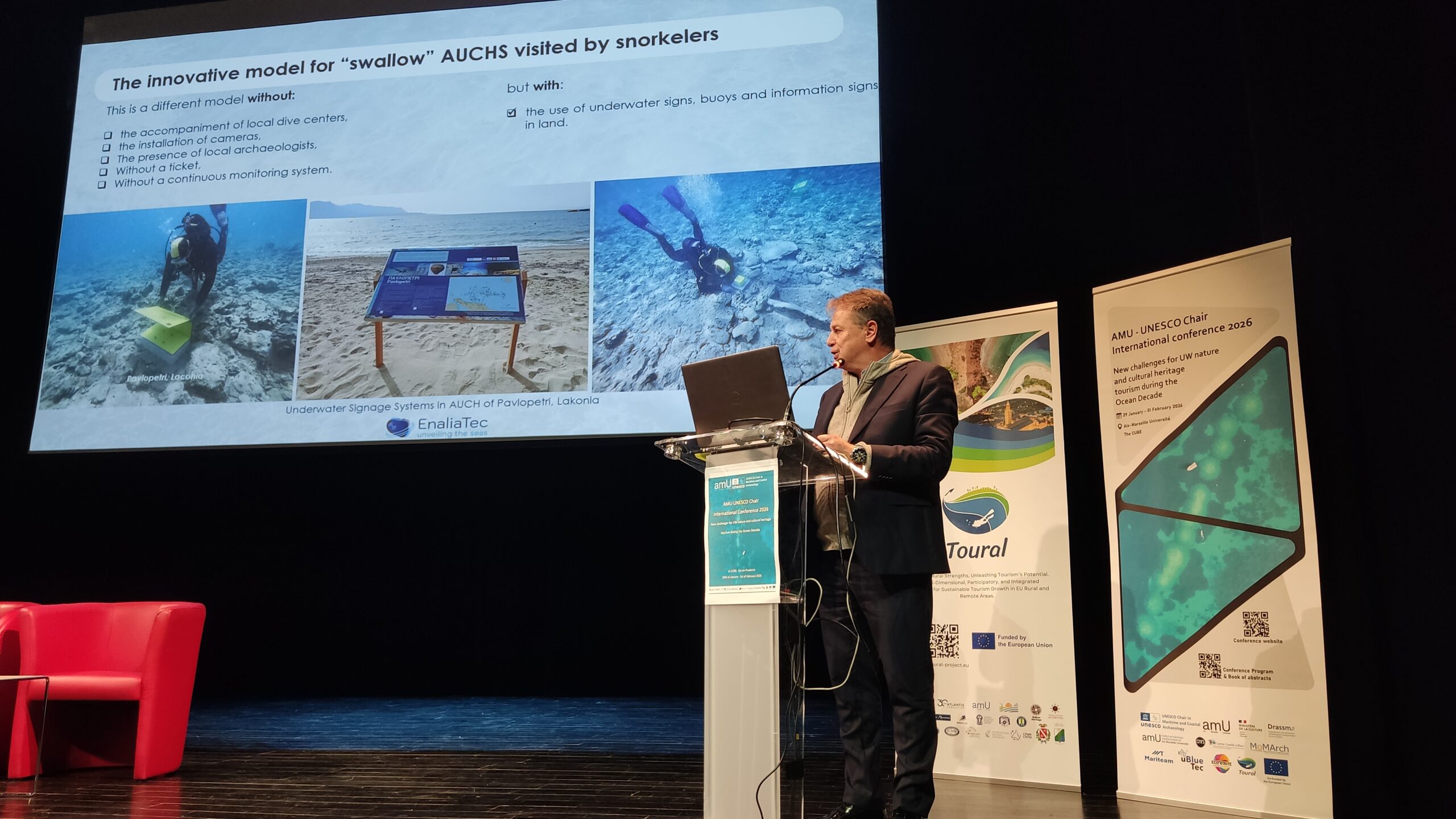
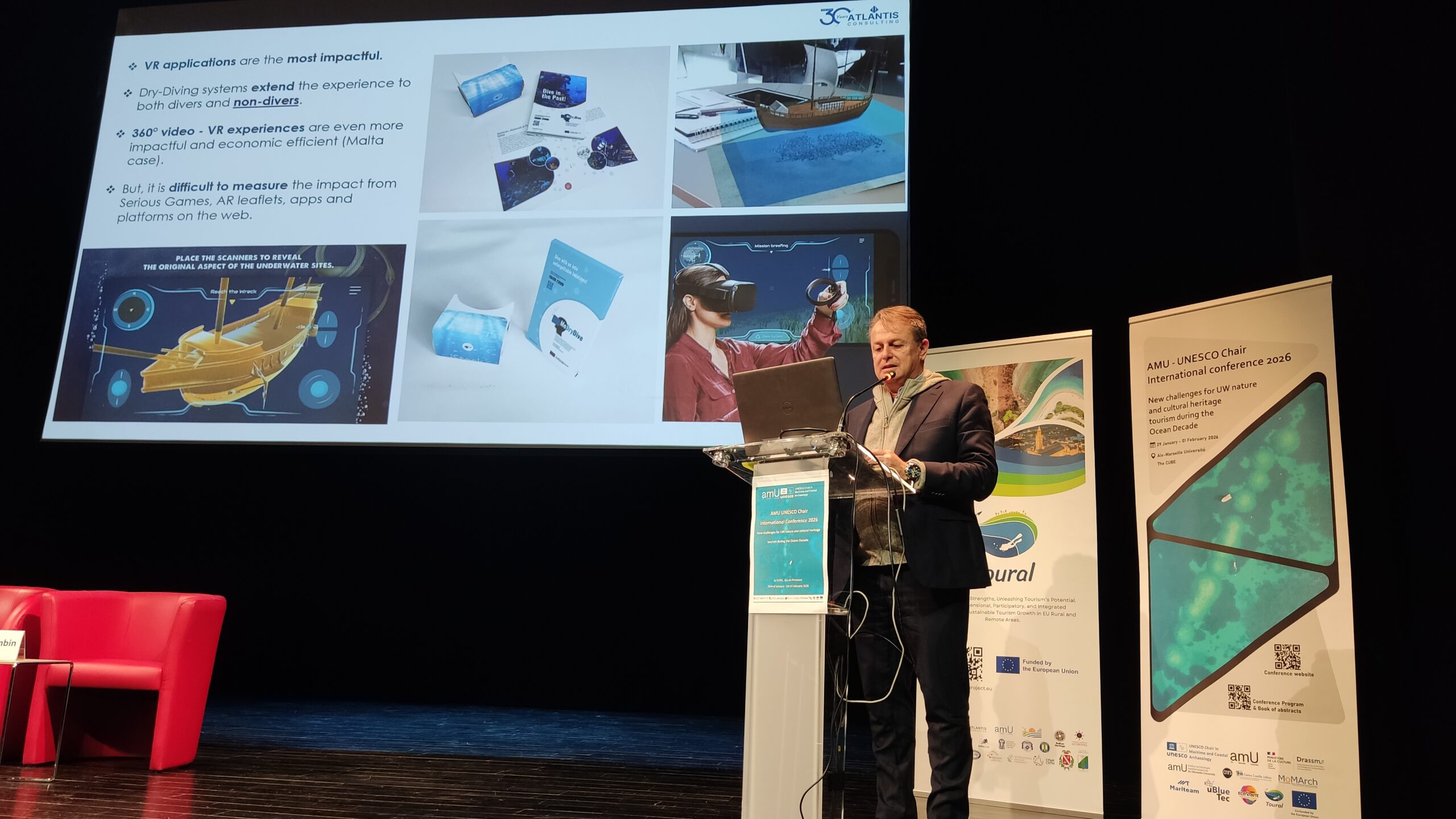
A particularly significant presentation was delivered by Angelos Maglis on Underwater Parks, Underwater Cultural Heritage, and Marine Protected Areas in Greece. Through case studies of different models of Accessible Underwater Archaeological Sites (AUAS) — such as the Classical-era shipwreck at Peristera, Alonnisos; modern “shipwreck monuments” submerged for over 50 years in Greek seas; and the prehistoric settlement of Pavlopetri in Laconia in shallow waters — it was clearly demonstrated that accessibility constitutes a fundamental prerequisite for the understanding and effective protection of Underwater Cultural Heritage. The decisive role of local communities, local diving centres, research institutions, and public authorities was emphasised, along with the contribution of the Knowledge Awareness Centres (KACs) in Alonnisos and Amaliapolis. At the same time, the importance of digital and immersive technologies (AR, VR, 360° experiences) in strengthening accessibility and public awareness was underlined, as well as the need to ensure sustained funding of underwater archaeological research at both European and national levels, so that Underwater Cultural Heritage can become a stable pillar of sustainable tourism development and the Blue Economy.
The conference concluded with an on-site visit to Cosquer Méditerranée, practically highlighting the connection between interpretation, innovation, and the sustainable promotion of heritage.
Learn more about the conference: https://unescochair-mca.org/international-conference-new-challenges-for-uw-nature-and-cultural-heritage-tourism-during-the-ocean-decade/
Learn more about the projects:
 English
  Ελληνικά